

See it in action
A real look at the student, family and guide views. Every student shown is fictional demo data.
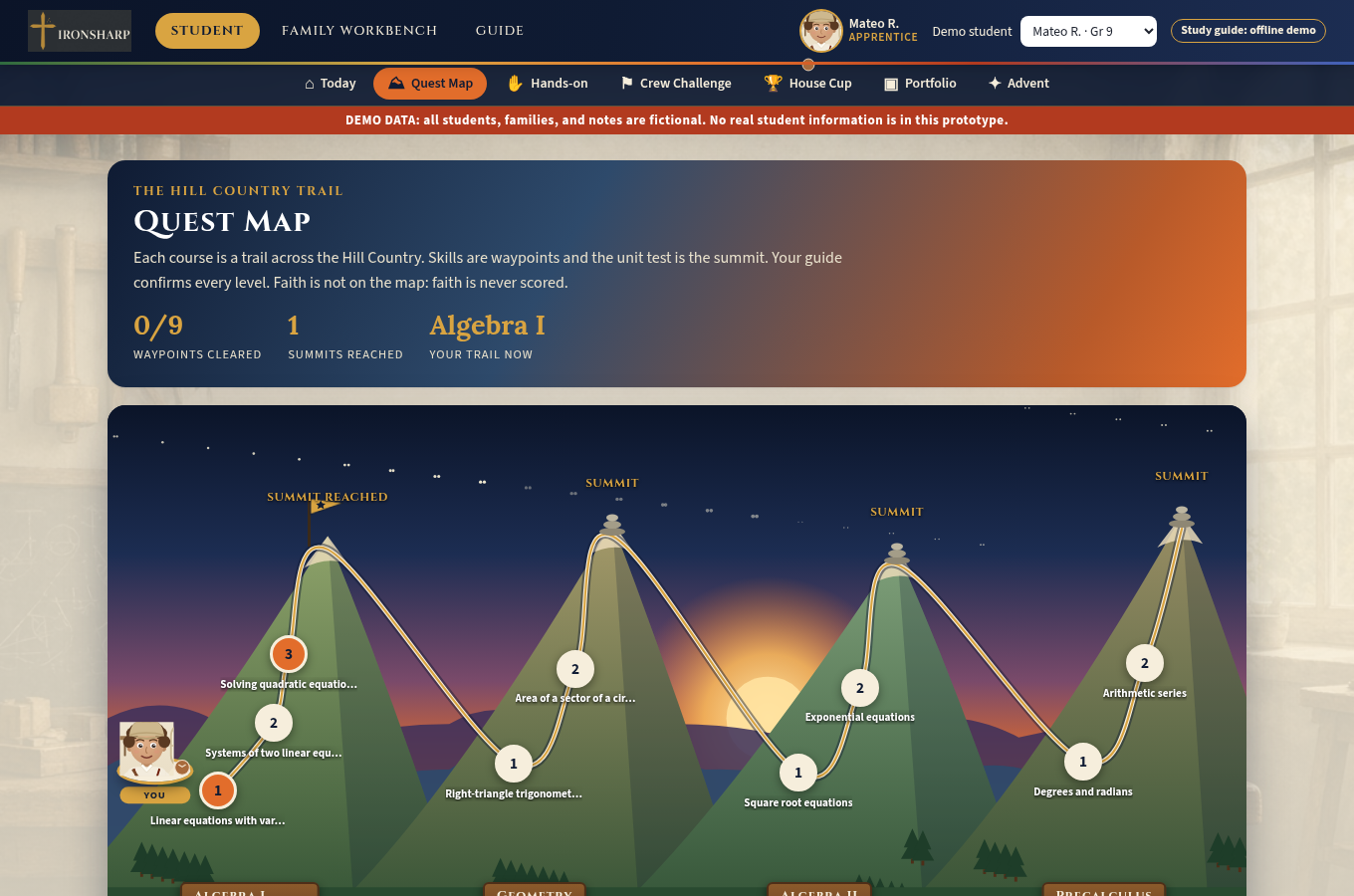
Quest Map. Each course is a Hill Country trail. Skills are waypoints, and the unit test is the summit.
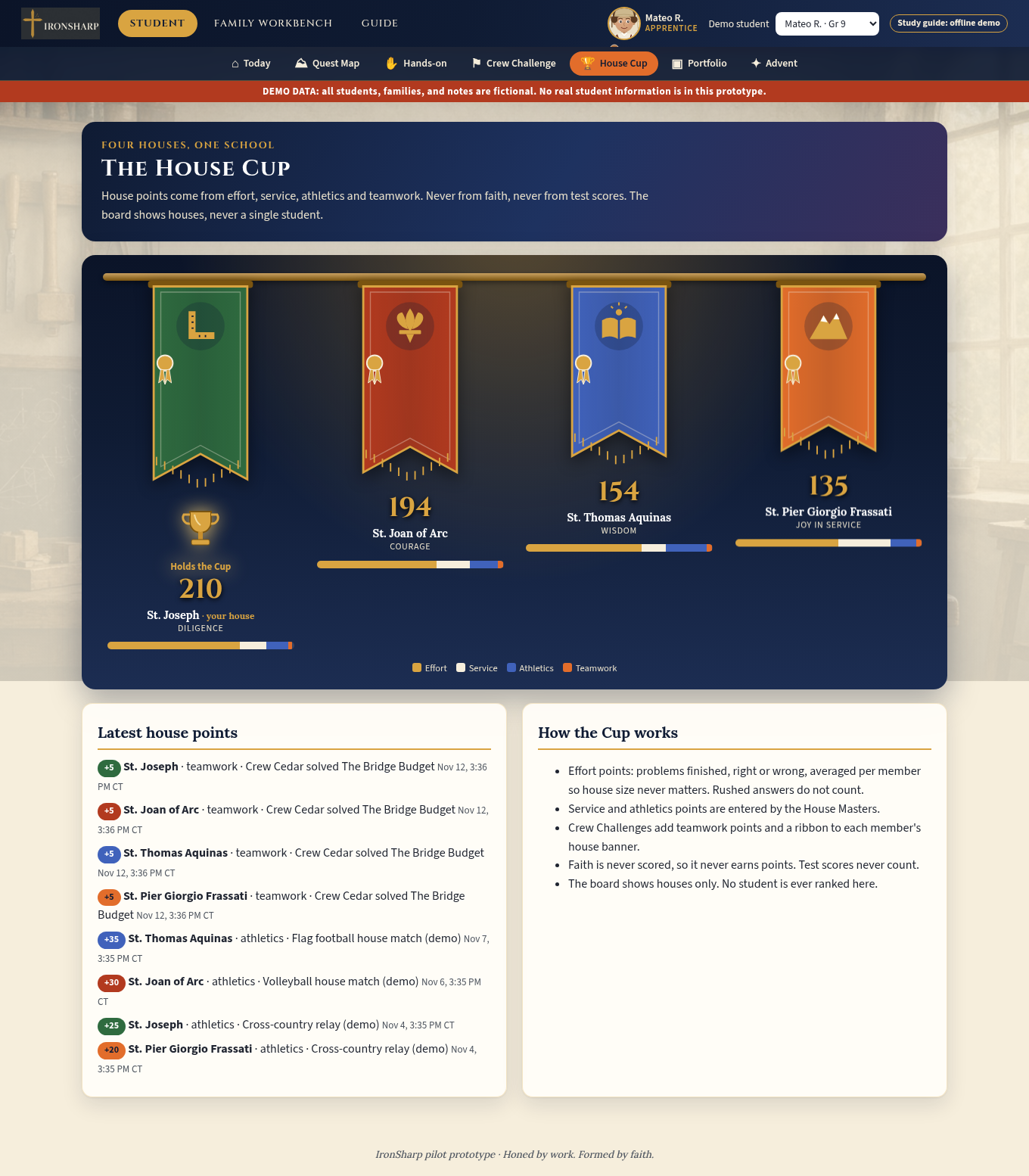
House Cup. Four houses earn points for effort, service, athletics and teamwork, never for faith or test scores.
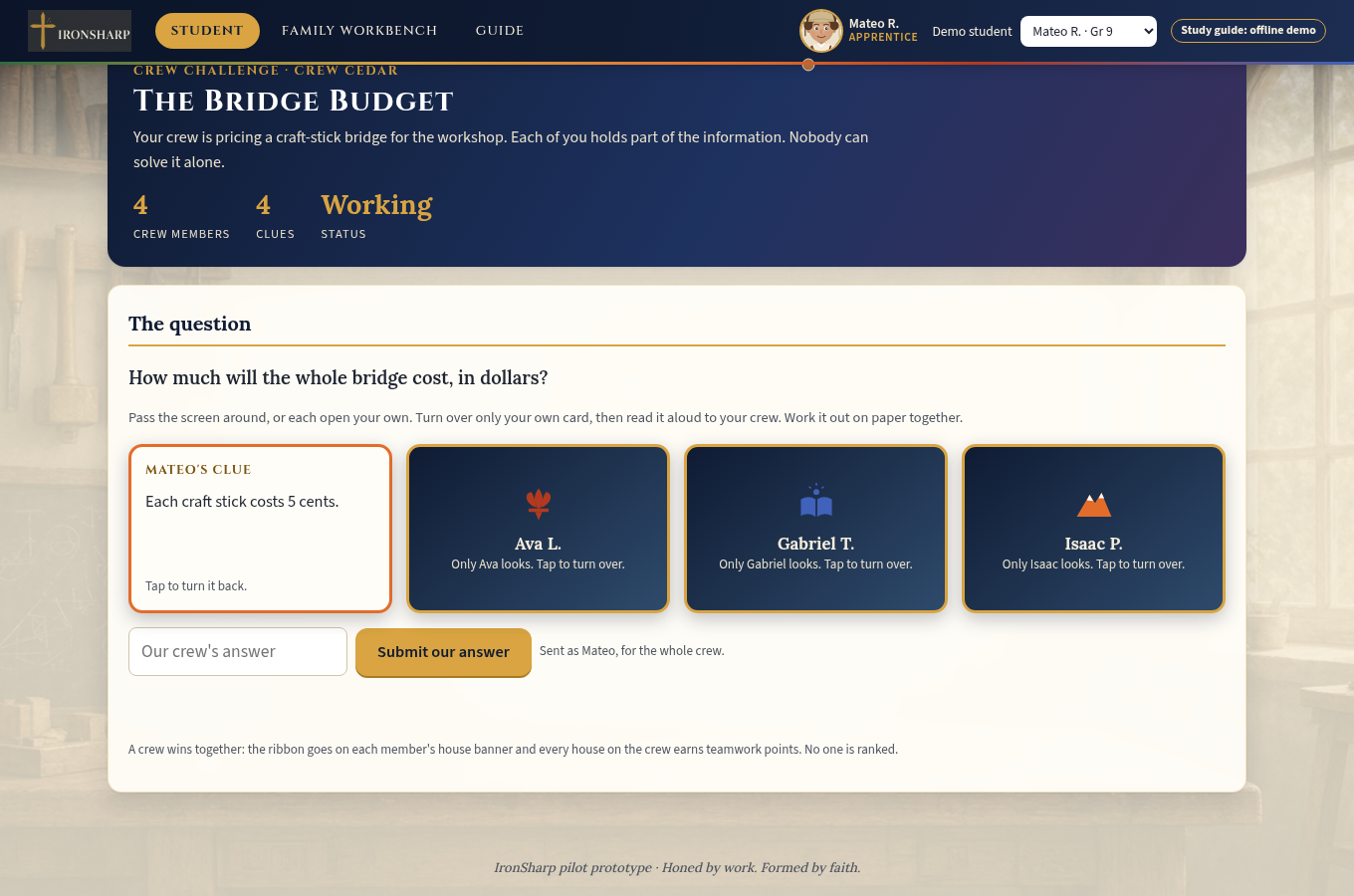
Crew Challenge. Each crew member holds a different clue, so the team has to talk it through.
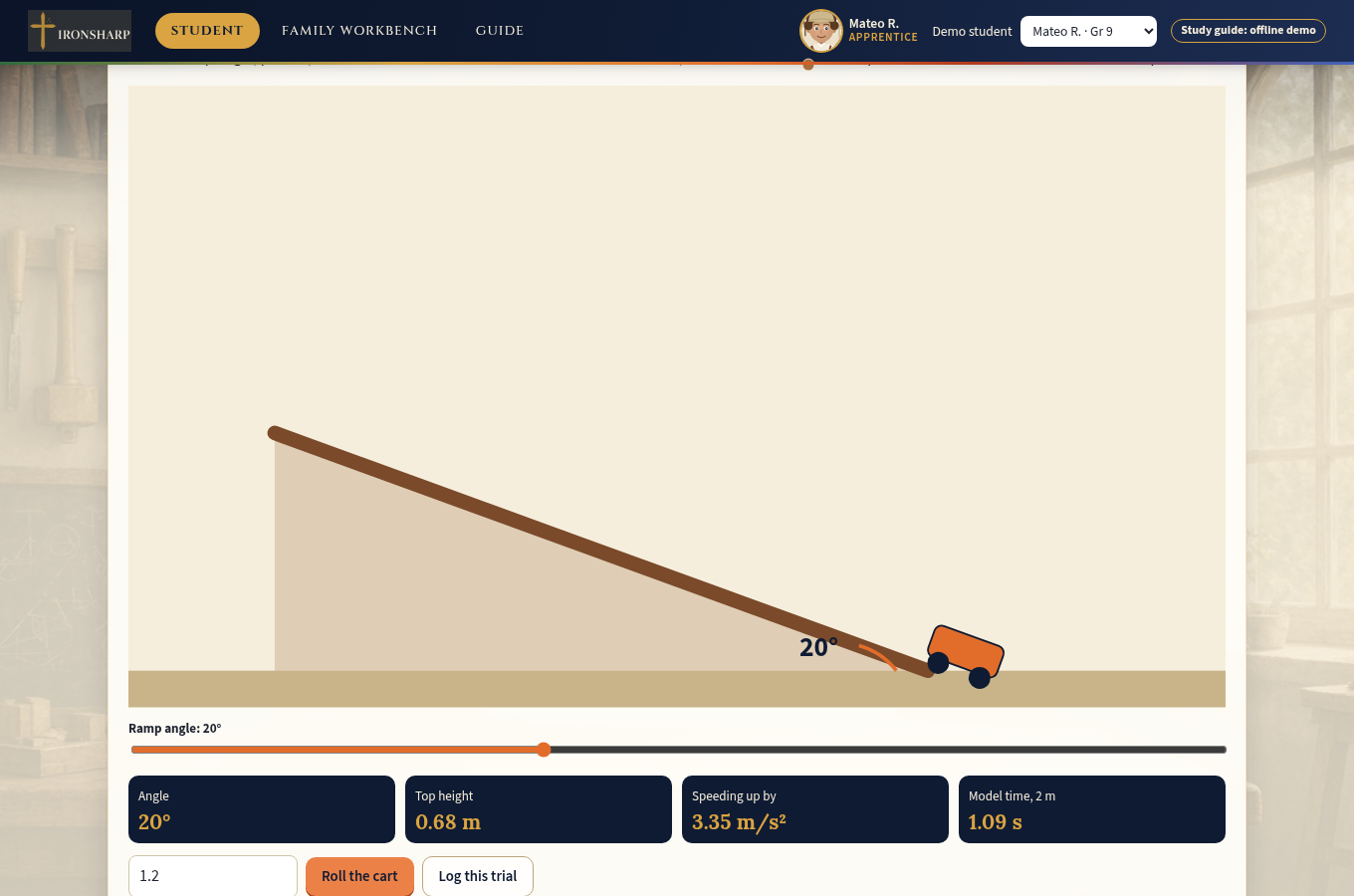
Hands-on bench. Fraction bars, a balance scale and a ramp with a cart to test ideas.
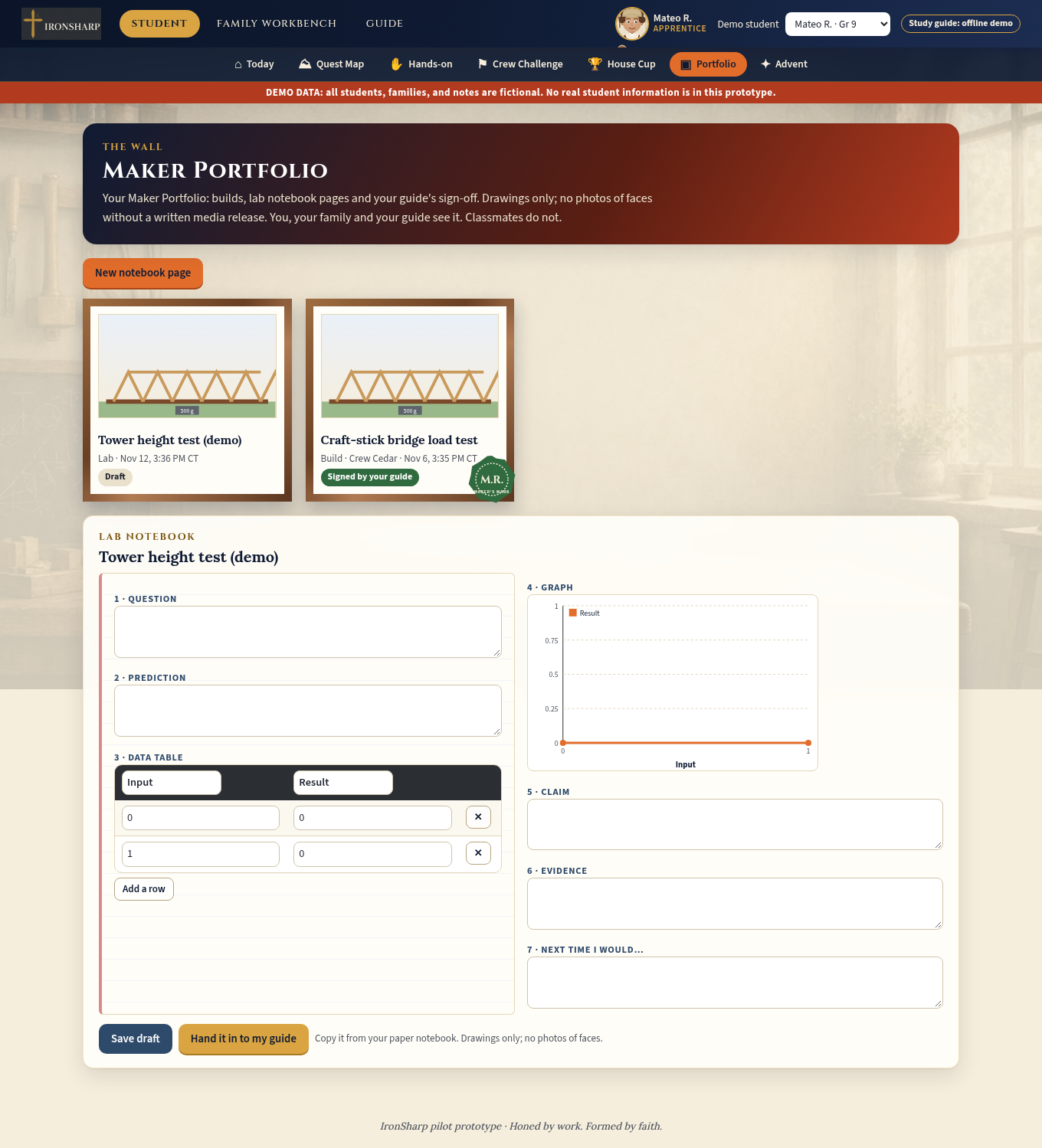
Lab Notebook. Question, prediction, data, claim and evidence, signed by a teacher.
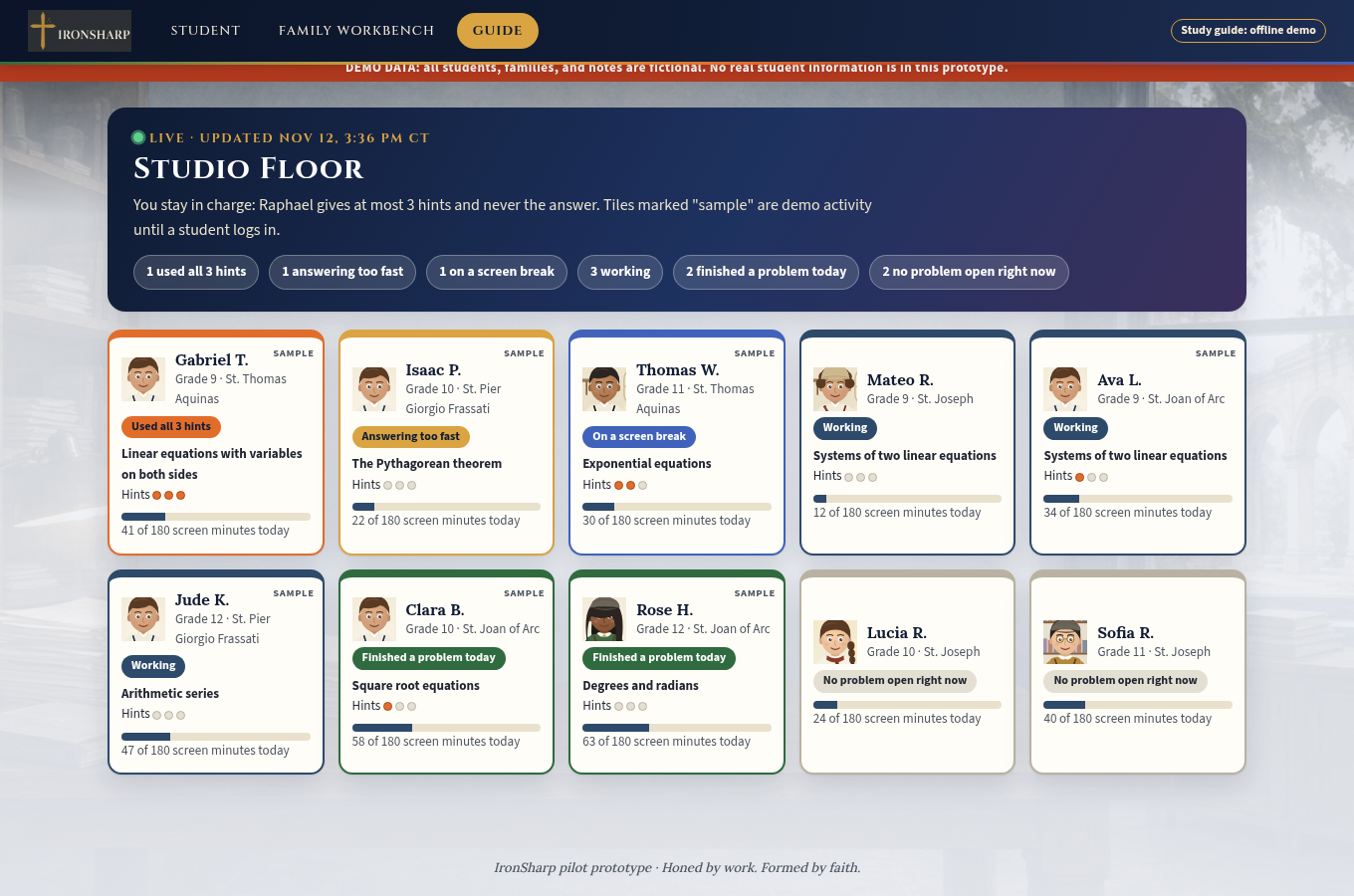
Studio Floor. Teachers see who's stuck, who's rushing and who's done at a glance.
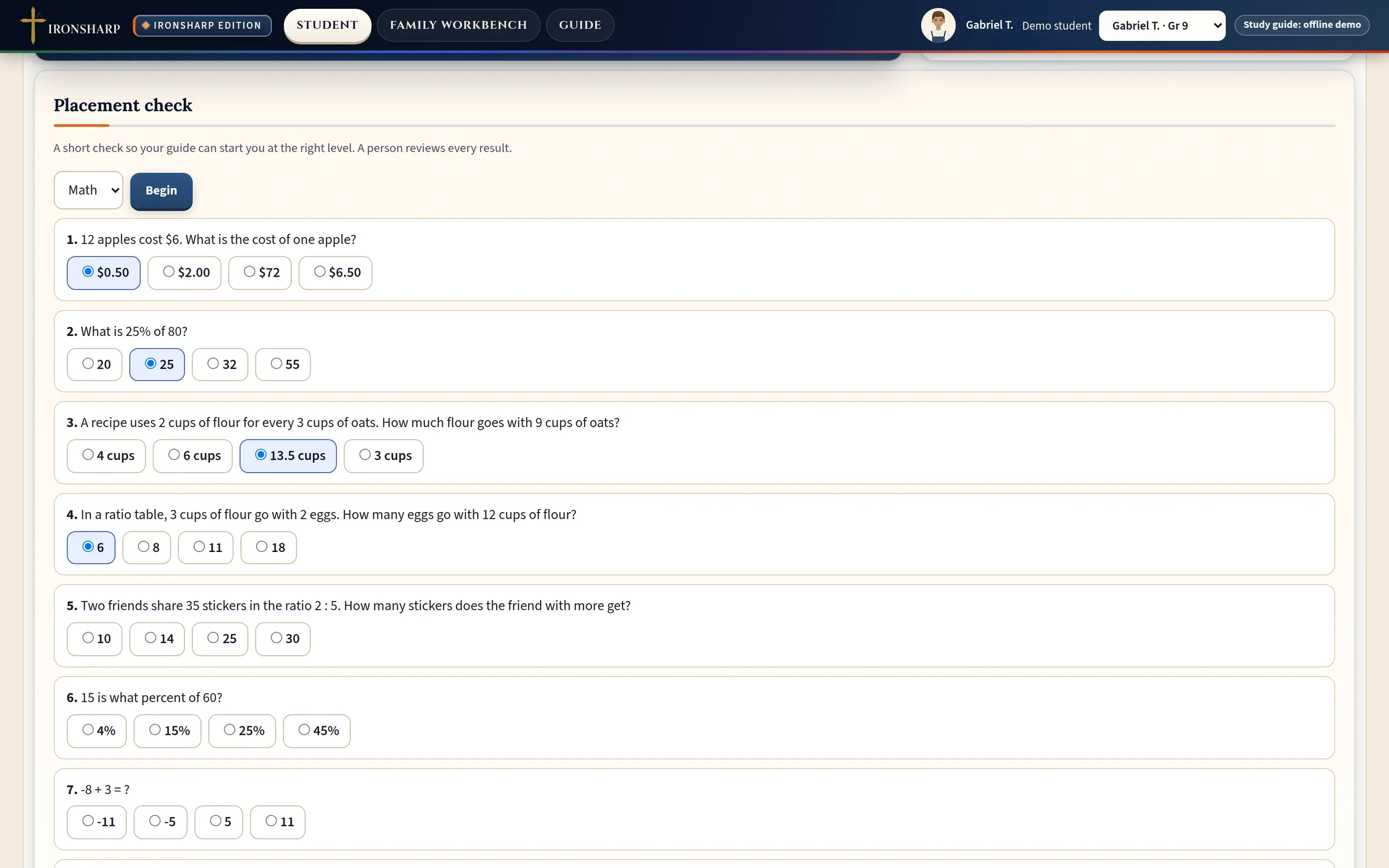
Placement. A short check so we start you at the level you've actually mastered. A teacher still signs off before it counts.
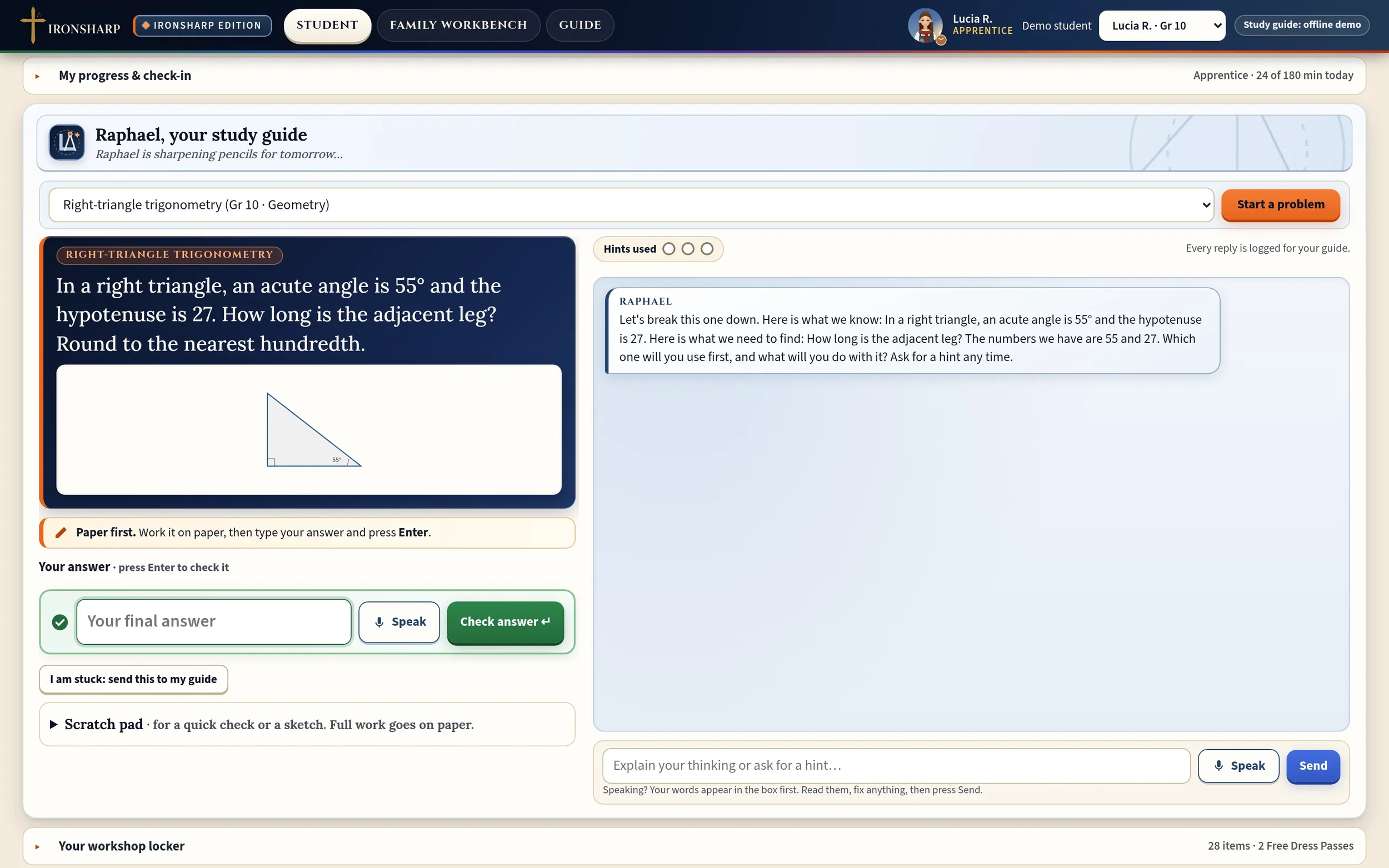
The work window. The problem stays on the left, with the figure. Raphael's hints stay on the right. The answer box is right there. Work it on paper first, then type it or speak it, and press Enter.
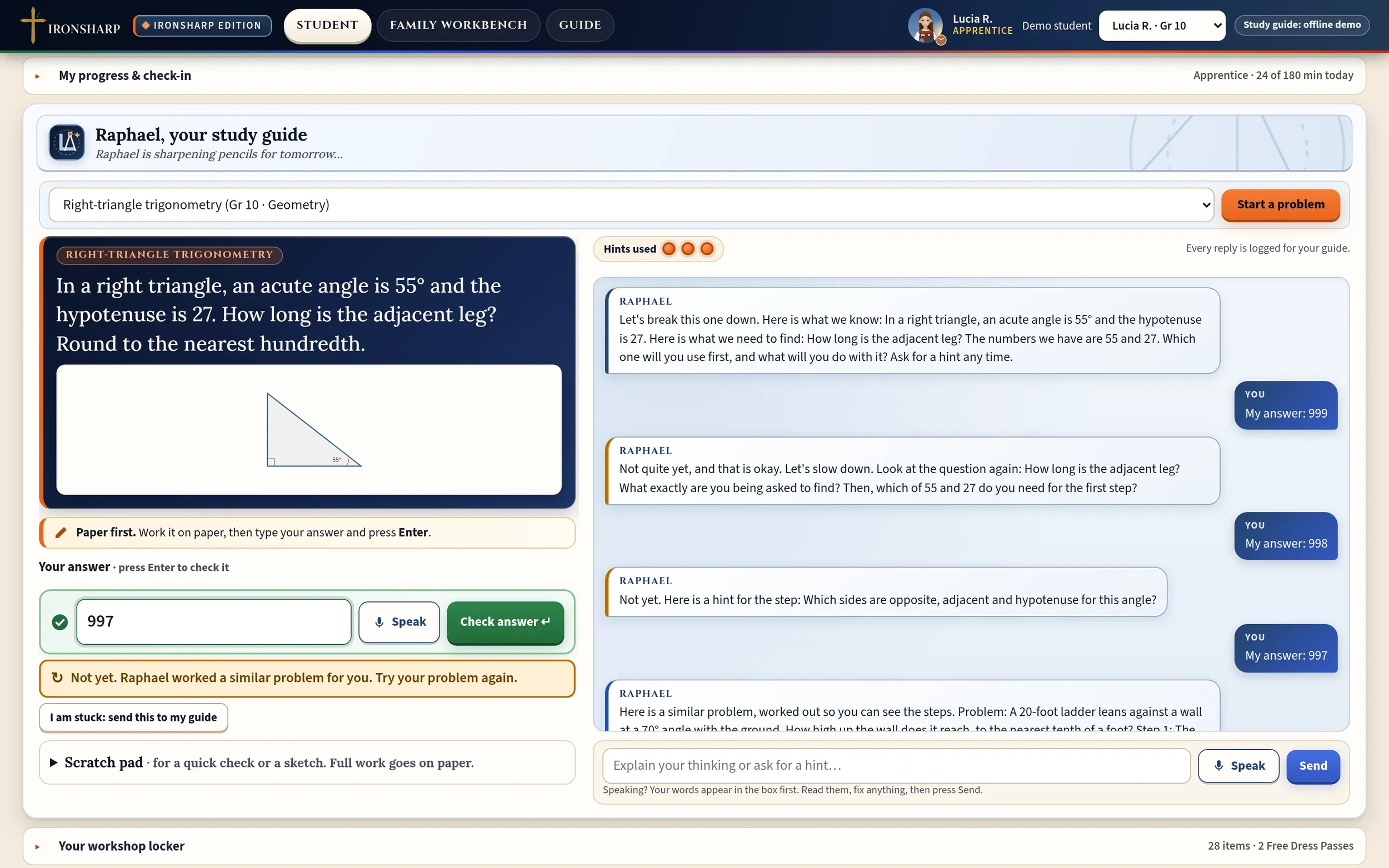
Raphael's coaching. Stuck? Raphael nudges first, then gives a hint, then works a similar problem step by step. He never hands you the answer. Your guide can read every line.
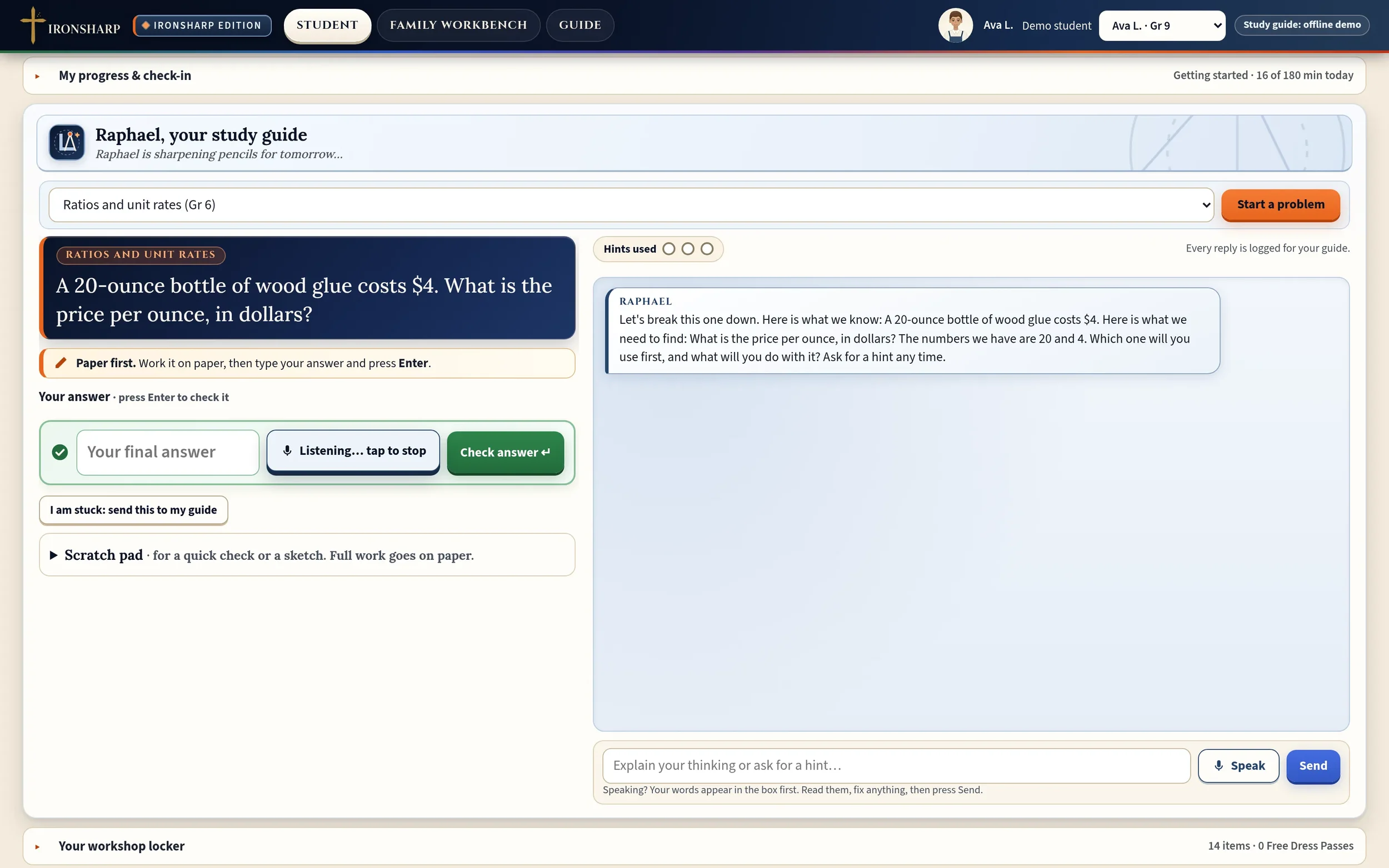
Speak the answer. You can speak the answer instead of typing it. The words show up in the box first, so you can fix them before you send. Nothing is sent until you say so.
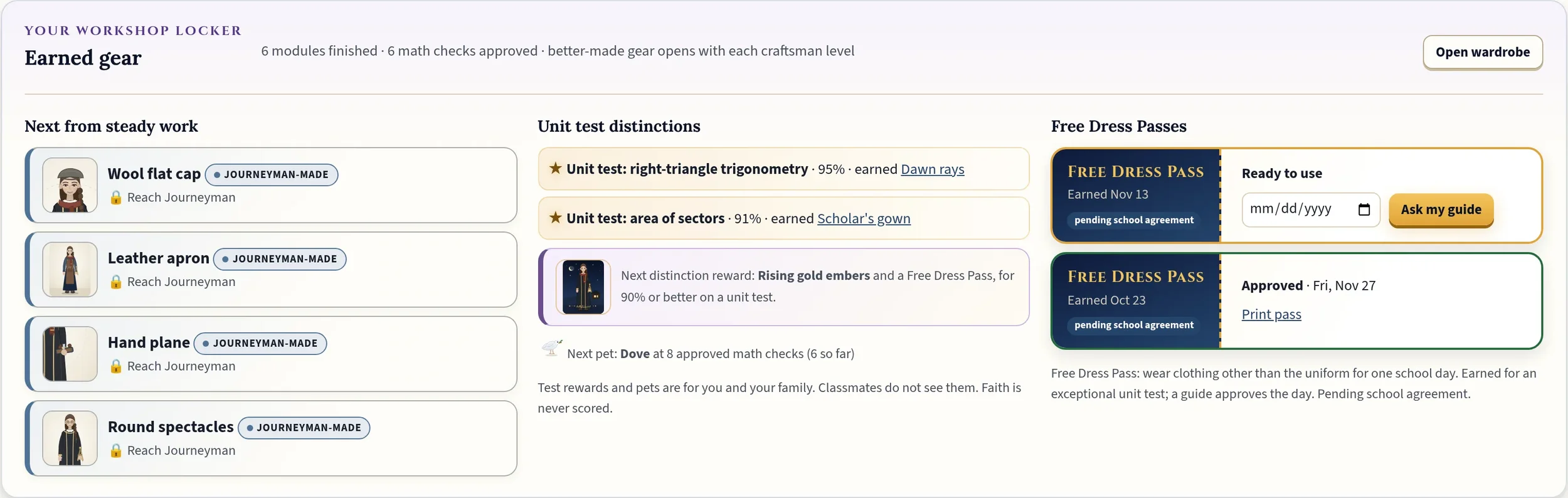
The workshop locker. Gear you earn from steady work, plus Free Dress Passes when a unit test is earned and a guide approves the day. Faith never unlocks a reward.
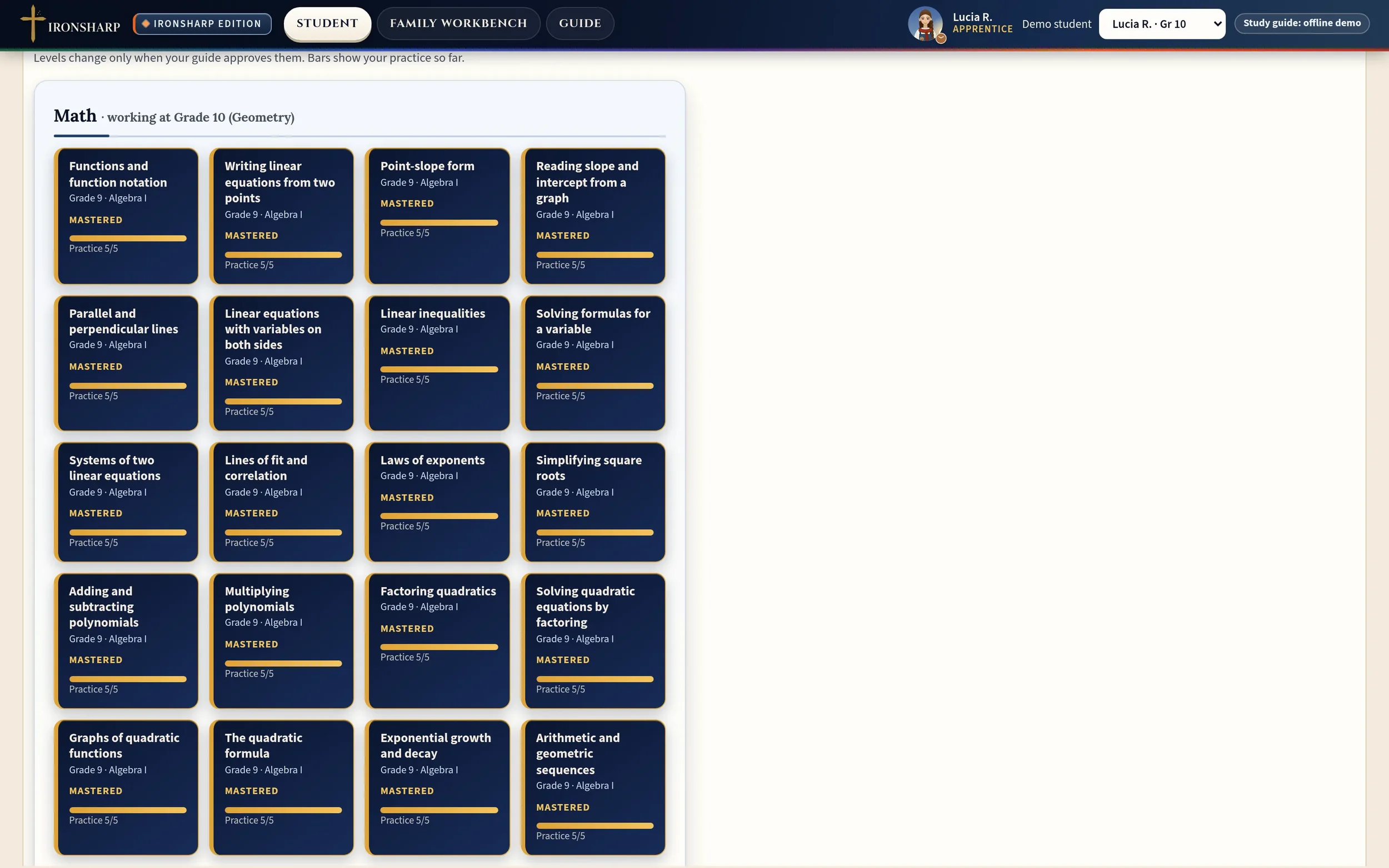
Mastery by subject. A clear read on which skills you've started, and which a teacher has already signed off. Levels change only when a guide approves them.
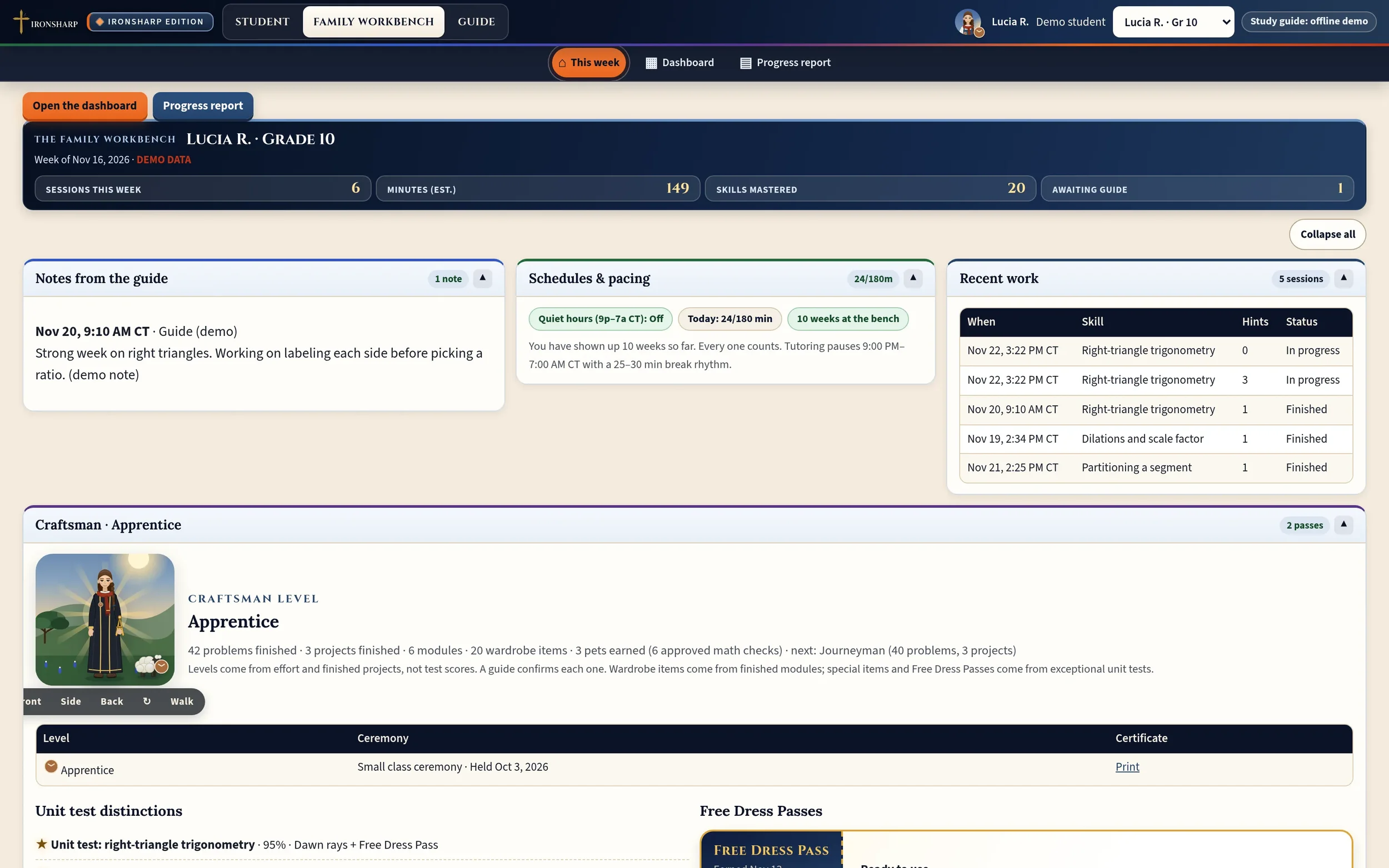
Family Workbench, this week. One screen for the week: notes from the guide, minutes used, recent work, and where the student stands.
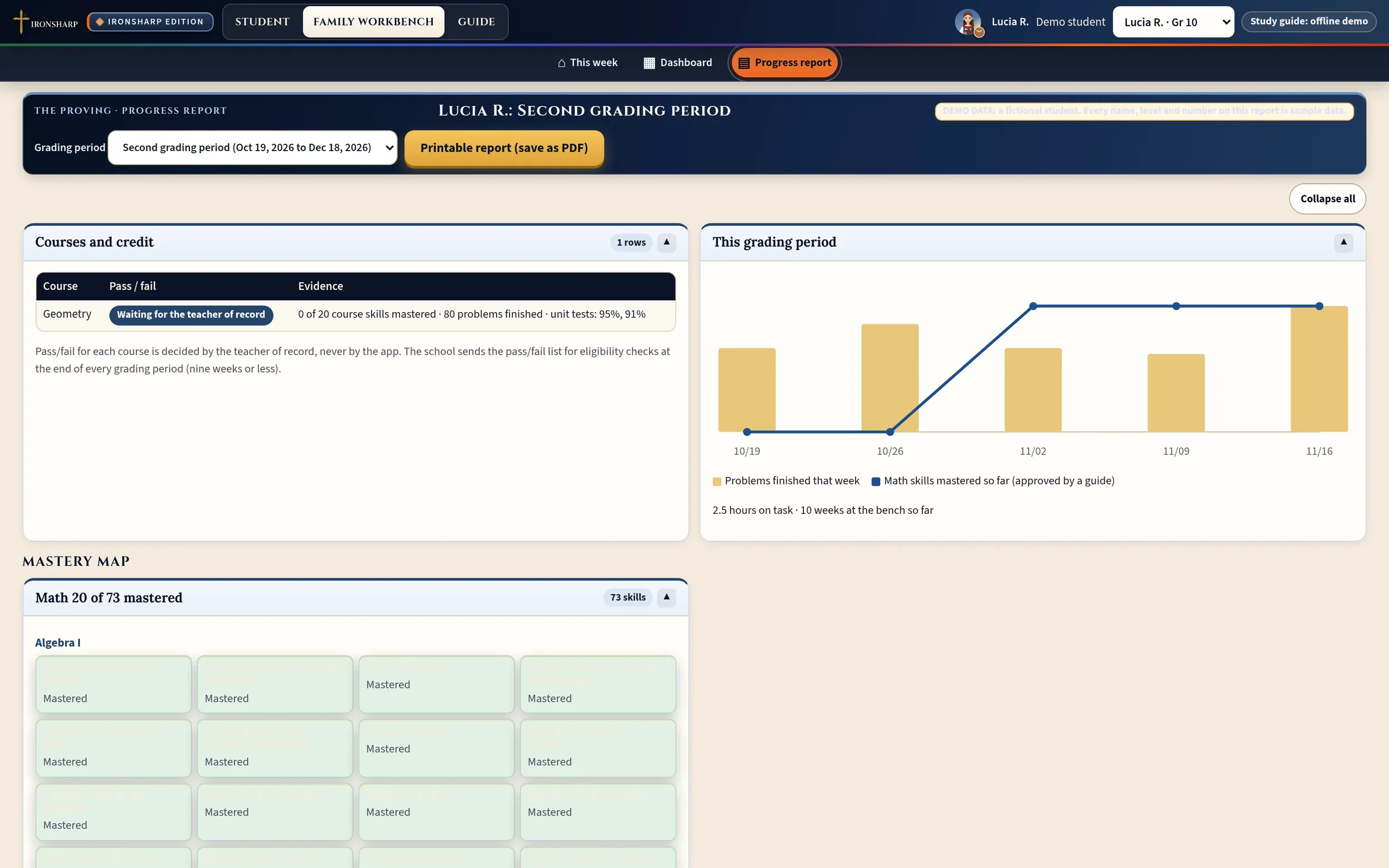
The Proving. The quarterly progress report. The student presents it to the family in person. A teacher of record still decides pass or fail. The app never does that on its own.
Build your craftsman and earn new gear
Walk the trail
Win it as a crew
How it works
Four parts. One plan for every student.
Placement
Placed by mastery, not by birthday.
Each student starts each subject at the level they have actually mastered. A student can work ahead in math and get extra help in reading at the same time.
Mastery
Move on when you've proved it.
Students show 90% on a skill, 85% on a unit test and 80% on an end-of-course exam before they move on. Nobody moves up just because the year ended. A teacher signs off on every grade.
The Family Workbench
Parents see the work.
One screen for every child in the family: today's work, the week ahead and mastery by subject. Each quarter brings The Proving, a report the student presents to the family in person.
Raphael, your IronSharp guide
Hints, not answers.
Raphael is the built-in study helper, named for the archangel who walked beside Tobias. He asks questions and gives hints so students do their own thinking. Teachers can read every conversation. He never stands in for a teacher, a parent or a pastor.
The school day
Mornings for mastery. Afternoons for making.
Short sessions
Each new concept is learned in a 10 to 30 minute session with adaptive software that meets the student at their level. Total software time is capped by grade, and the software enforces the cap.
Paper and discussion
Then the concept moves onto paper and into discussion with a teacher and classmates. Phones stay put away.
Real books, real pencils
Novels and great books are read on paper. Early drafts are written by hand.
IronSharp Works
Then the day's concept goes into the real world: group projects, experiments and long-term leadership and business projects where students earn income and build confidence and leadership.